
Quick Guide:
- Equipment Setup & Attachments
- Step-by-Step Instruction of Standing Cable Overhead Tricep Extension
- Common Mistakes
- FAQ
Why choose the Tousains cable machine CR63:

- Foldable design for easy storage and better space efficiency
- Built-in wheels for convenient movement
- Supports 30+ cable exercises at an affordable price ($200+)
- Compatible with adjustable dumbbells from Bowflex, PowerBlock, and NordicTrack
Equipment Setup & Attachments
1. Choosing Your Attachment
Instead of choosing a random handle, it is necessary to understand the benefits of each and pick one that delivers the best result.
- The Rope Attachment (Recommended): The rope is the gold standard for this movement. It allows your wrists to move naturally.
- Straight Bar or EZ-Bar: These allow you to lift heavier weights, but they can be tougher on the wrists and elbows since your hand position is fixed.
- D-Handle: Perfect for unilateral (one-arm) training if you are focused on fixing muscle imbalances.

With Tousains cable machine CR63, you have all three handles plus a V-shaped handle in the box for free.
2. Setting the Cable Height
Don't make the mistake of setting the cable too high or too low. The ideal height is approximately at the hip height. This makes it easier to turn around and get into the starting position without straining your shoulders.
3. Weight Selection
Your arms are in a vulnerable overhead position, so start lighter than you would for a standard tricep pushdown. It is recommended to choose a weight where you can comfortably complete 12–15 reps with perfect control before trying to go heavier.
Step-by-Step Instruction of Standing Cable Overhead Tricep Extension

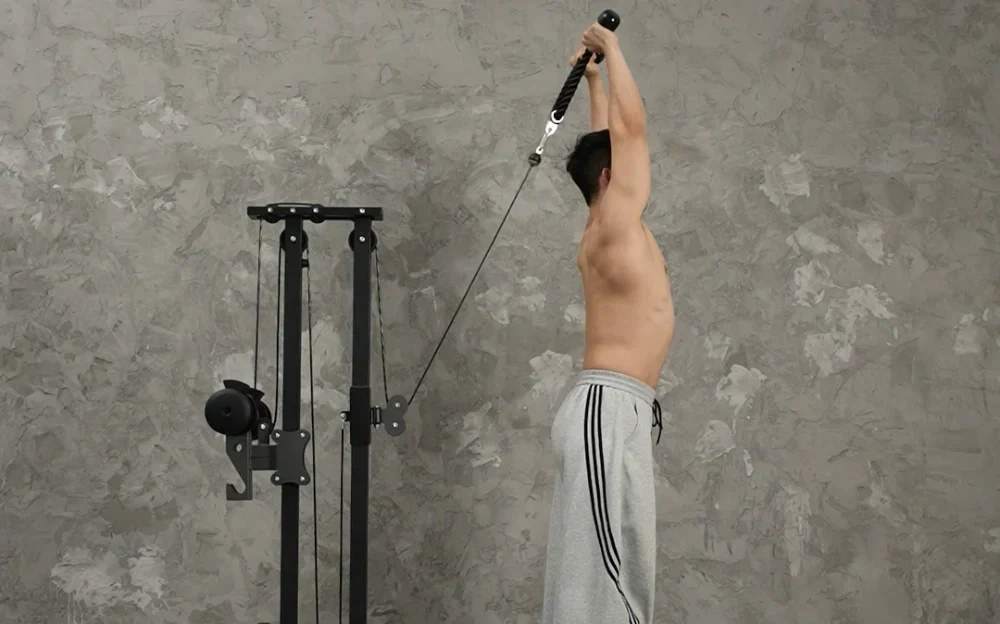
- Stand facing away from the cable machine and grab the rope attachment with a neutral grip, palms facing each other.
- Step forward to create tension on the cable. Use a staggered or split stance (one foot forward and one foot back) to provide a stable base and prevent the weight from pulling you backward.
- Bring your hands behind your head with your elbows bent. Your elbows should be pointing toward the ceiling and kept close to your ears.
- Exhale as you extend your arms upward and slightly forward. Continue the movement until your arms are fully straight.
- Keep your core tight and your back straight. Avoid arching your lower back as you reach the top of the rep.
- Hold the fully extended position for one second. You should feel an intense contraction in the long head of your triceps.
- Inhale as you slowly lower the weight back to the starting position behind your head. Allow the weight to pull your hands back far enough to feel a deep stretch in the triceps.
Tip: Complete your desired number of repetitions, ensuring the last rep looks exactly like the first. If your form starts to break or your elbows flare out, the weight may be too heavy.
Common Mistakes to Avoid
1. Setting the Pulley Too Low
Dragging a heavy weight from floor level up behind your head can be struggling and lead to incorrect form.
How to fix: Set the pulley at around hip height. This allows you to safely grab the attachment without risking a shoulder strain.
2. Flaring Elbows and Moving the Upper Arms
When the weight is too heavy, the elbows tend to flare outward, and the upper arms begin to swing forward and back. This turns the movement into a chest and shoulder press rather than a tricep isolation exercise.
How to fix: keep your upper arms locked in place right next to your ears. Your elbows should act as fixed hinges, meaning only your forearms should move during the rep.
3. Arching the Lower Back
It is common to over-arch the spine to compensate for heavy weight or poor core stability, which puts excessive pressure on the lumbar spine.
How to fix: tighten your abs as if you are about to take a punch. Use a staggered stance (one foot forward) to help maintain a neutral spine and a stable torso.
4. Limited Range of Motion
This refers to the mistakes of performing the top half of the move. When not letting the hands travel far enough back, you miss out on the primary benefits of the overhead position for the long head of the tricep.
How to fix: Lower the weight slowly until you feel a full stretch in the back of your arms. Ensure you reach full lockout at the top of every repetition.
FAQ
What are the cable overhead tricep extension muscles worked?
The primary target is the triceps brachii, which consists of three parts: the long head, the lateral head, and the medial head. Wondering overhead tricep extension for which head? It is highly effective at targeting the long head, which is the largest part of the tricep.

Image source: shoulder-pain-explained.com
Additionally, your core and shoulder stabilizers act as secondary muscles to keep your body steady during the movement.
How much weight should I use?
You should use a weight that allows you to complete 10 to 15 repetitions with perfect form. It is better to prioritize higher volume and control over maximum heavy weight. If your elbows start to flare or your back begins to arch, the weight is too heavy.
How often should I train the rope overhead tricep extension?
For most lifters, training the triceps 2 to 3 times per week is ideal for growth. Just ensure you allow at least 48 hours of recovery between sessions to let the muscle fibers repair and grow.

