
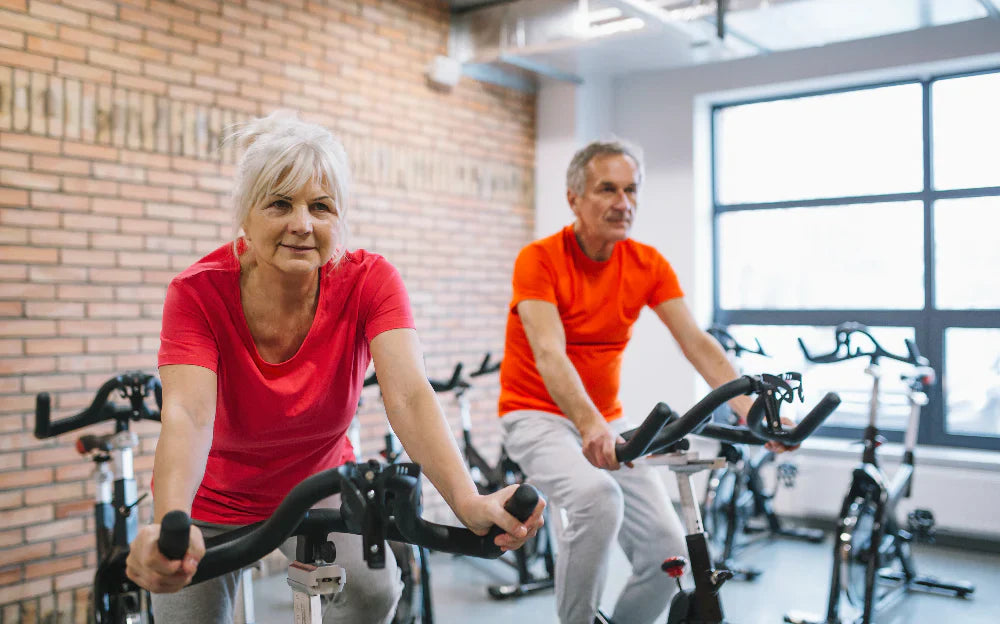
According to a CDC report, only 13.9% of adults aged 65 and over met federal physical activity guidelines for both aerobic and anaerobic exercise in 2022. If you find yourself in the remaining 86.1%, you aren't alone, but it may be time to rethink your movement strategy.
While various pieces of elderly fitness equipment are available, the exercise bike for seniors remains one of the most effective and accessible low-impact cardio machines. Cycling offers a way to strengthen the heart and lungs without joint strain. However, not all bikes are created equal. This article will guide you through seven different types and help you determine which is the perfect fit for your lifestyle.
The Unique Needs of Senior Cycling
Choosing an exercise bike for seniors is about more than just staying fit; it is about ensuring every movement is safe, sustainable, and comfortable.
1. Joint Preservation and Low-Impact Movement
Aging joints often experience a reduction in synovial fluid, the body's natural lubricant, alongside the thinning of protective cartilage. Low-impact cardio machines like stationary bikes are ideal because they promote essential blood flow to the knee and hip joints without the jarring impact of running on pavement.
2. Balance and Fall Prevention
Balance problems or dizziness are common among older adults, according to the study. An exercise bike for seniors, particularly one with a stable base and ergonomic back support, helps you remain active without the risk of falling, thanks to its secure, seated design that prioritizes your safety.
3. Controlled Cardiovascular Intensity
The aging heart requires a predictable and steady increase in intensity to improve stamina without causing sudden, dangerous heart rate spikes. The adjustable resistance found in a stationary bike for elderly users allows for precise, incremental control over your physical workload.
Different Types of Exercise Bikes Explained
1. Recumbent Bike

The recumbent bike is characterized by its oversized, chair-like seat and a step-through frame that allows you to sit down without lifting your legs. The pedals are positioned in front of you, creating a semi-reclined posture for long-term comfort.
Pros: Full lumbar back support; easiest to sit and get off; lowest risk of falls.
Cons: Takes up more floor space and budget than other models; less core muscle engagement.
Best For: Seniors with chronic back pain, balance issues, or those for rehabilitation.
2. Upright Bike

The upright bike mimics a traditional outdoor bicycle, featuring a smaller saddle with the pedals positioned directly beneath the hips. This exercise bike for seniors requires you to sit upright, which helps maintain a sense of natural riding mechanics while occupying a very small footprint in your home.
Pros: Compact and easy to store; provides a modest core workout to stay upright.
Cons: Lack of back support can cause slouching; the narrow seat may be uncomfortable for some.
Best For: Generally active seniors with good balance and limited living space.
3. Spin Bike

Spin bikes are built for performance, featuring a heavy flywheel and handlebars that sit lower than or parallel with the seat, requiring a forward-leaning racing posture. While these are common in gym classes, they are a more intense stationary bike for elderly users who want to simulate a road-cycling experience.
Pros: Very sturdy and durable; allows for high-intensity intervals and standing pedaling.
Cons: Aggressive posture can strain the neck and wrists; the seat is often quite hard.
Best For: Advanced senior cyclists who have high mobility and want a challenging workout.
4. Air Bike (Fan Bike)

Identified by its large front fan and dual-action handlebars, the air bike uses wind resistance, which means the faster you pedal, the harder the workout becomes. This is unique fitness equipment for seniors because it requires you to push and pull with your arms while you pedal with your legs.
Pros: Provides a full-body workout; resistance level is completely controlled by your effort.
Cons: The fan can be noisy and create a constant cold breeze; it requires more coordination.
Best For: Seniors with good balance ability and looking to improve upper-body strength and overall cardiovascular power.
5. Cross-Trainer Bike
The cross-trainer is a hybrid machine that combines the seated pedaling of a bike with the smooth, elliptical motion of an upper-body trainer. It is designed to be a comprehensive low-impact cardio machine that keeps both the arms and legs moving in a synchronized rhythm.
Pros: High calorie burn with minimal to zero joint impact; improves coordination between limbs.
Cons: Often more expensive and mechanically complex than a standard bike.
Best For: Seniors who want a one-and-done machine for total body conditioning.
6. Folding Exercise Bike

These bikes are designed with an X frame that allows the machine to fold flat for storage in the corner. They are often the most lightweight stationary bikes for elderly users, making them easy to move around the house as needed.
Pros: Extremely space-efficient and usually very affordable.
Cons: Less stable than fixed-frame bikes; may feel wobbly for heavier users.
Best For: Seniors in small apartments who only need light and consistent movement.
7. Mini Exercise Bike (Pedal Exerciser)

The mini bike is a compact set of pedals that sits on the floor, allowing you to stay active while sitting in your own favorite armchair or sofa. It is frequently cited as the best leg exerciser for elderly individuals who aren't ready for a full-sized machine but need to keep their blood flowing.
Pros: Can be used anywhere; incredibly portable and easy to use while watching TV.
Cons: No handlebars; limited resistance for building strength.
Best For: Seniors with significantly limited mobility or those in early-stage physical therapy.
Tips for Safe Workouts
Optimize Seat Height
Proper alignment is the first line of defense for your joints. When your foot is at the bottom of the pedal stroke, your leg should not be completely straight; instead, aim for a slight bend in the knee.
Prioritize a Proper Warm-Up and Cool-Down
Cold muscles are more prone to strain, and aging joints require a few minutes of movement to circulate synovial fluid, the body's natural lubricant. Spend at least 5 minutes pedaling at a very low intensity before increasing the resistance, and repeat this process at the end of your session.
Start Slow and Listen to Your Body
If you are new to using an exercise bike for seniors, start with short sessions of about 15 minutes to build your baseline stamina. If you feel discomfort in your knees, lower back, or experience any dizziness, stop pedaling immediately.
Stay Hydrated Throughout Your Session
Hydration is critical for maintaining blood volume and regulating body temperature. Keep a water bottle within reach and take small, frequent sips throughout your workout rather than waiting until you feel thirsty.
Best Foldable Stationary Bike for Seniors from Tousains
For seniors seeking a balance between safety, space efficiency, and price, the Tousains exercise bike for seniors is our top recommendation. While many bikes focus on intensity, this model is engineered with the StrideEase philosophy, prioritizing a comfortable and easy approach to stay active and maintain mobility.
When you choose Tousains, you’re getting more than just a one-year warranty and rapid-response support. You are investing in a thoughtfully designed piece of elderly fitness equipment that prioritizes your safety and comfort. Key features of this exercise bike for seniors include:
- Supportive and cushioned backrest to relieve lower-spine tension.
- 8 levels of magnetic silent resistance for gradual progress and quiet workouts.
- Foldable and portable design for easy movement and storage
- Solid construction for up to 265 pounds of weight capacity
- Non-slip design for safe workouts
At the end of the day, fitness is not just a momentary impulse; it is a lifelong commitment to your well-being. No matter what type of exercise bike you choose, the key to success is consistency. Happy cycling!

