
With the rise of the 10,000 steps a day trend, treadmills have become one of the most popular cardio workout machine choices. But for many people, questions remain.
In this guide, we’ll cover everything you need to know and also keep this page updated regularly as new insights and trends emerge, so feel free to bookmark it and check back anytime.
What Is a Treadmill

A treadmill is a cardio machine that allows you to walk, jog, or run indoors on a moving belt. It’s designed to simulate natural walking, jogging, or running while letting you control key factors like speed, incline, and workout duration.
Types of Treadmills
Treadmills can be classified in different ways. From a technical perspective, they are often divided by how they’re powered: manual treadmills, which rely on your own movement, and motorized treadmills, which use a built-in motor to control speed and incline. While this distinction is useful, it’s not always the most practical when choosing a treadmill for everyday use. For most users, it makes more sense to look at treadmills based on their structure.
Folding Treadmills: Folding treadmills are designed to save space. They can be folded up and stored when not in use, making them ideal for apartments, small rooms, or anyone who needs flexibility in their setup.
Non-Folding Treadmills: Non-folding treadmills are typically more stable and durable. They’re often preferred for regular running or more intense workouts, especially if you have a dedicated workout area at home.
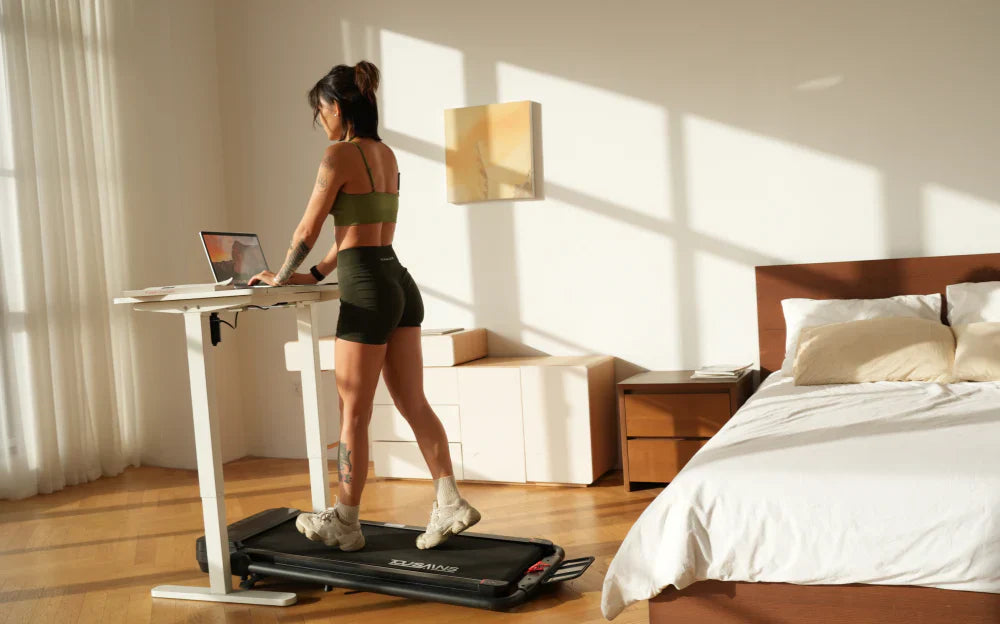
Under-Desk Treadmills: Also known as walking pads, under-desk treadmills are compact and designed for walking. They’re a great option for staying active while working, helping you reach daily step goals without setting aside extra workout time.
Each type serves a different purpose, so the right choice depends on how you plan to use your treadmill and the space you have available.
Treadmill Benefits and Potential Limits
Benefits
Convenient and Weather-Independent: A treadmill allows you to work out anytime at home, regardless of weather, daylight, or gym access. This makes it much easier to stay consistent with your routine.
Beginner-Friendly and Easy to Progress: You can start with simple walking and gradually increase speed or incline as your fitness improves, making it suitable for all levels.
Controlled and Measurable Workouts: Speed, incline, time, and distance are all adjustable and trackable, helping you follow structured workout plans more effectively.
Supports Weight Loss and Cardio Health: Whether you prefer steady walking or higher-intensity sessions, treadmills provide a reliable way to burn calories and improve cardiovascular fitness.
Lower Impact Compared to Outdoor Running: Many treadmills offer cushioned surfaces, which can reduce stress on joints compared to hard outdoor surfaces like concrete.
Potential Limits
Can Feel Repetitive Over Time: Without changing speed, incline, or workout style, treadmill sessions may become monotonous compared to outdoor exercise.
Less Natural Movement Variation: Unlike outdoor terrain, treadmill running lacks changes in surface and direction, which may reduce activation of stabilizing muscles.
Noise Issues: Some treadmills, especially motorized models, can generate noticeable noise during use. This may be a concern in apartments or shared living spaces.
Upfront Cost Can Be High: A quality treadmill is an investment, especially if you’re looking for durability, incline features, or quiet operation.
Related: Is a Compact Treadmill for Home Any Good? Pros and Cons
Is a Foldable Treadmill with Incline Worth It?
Who Should Use a Treadmill
Treadmills are versatile machines suitable for a wide range of users, but certain groups can benefit the most:

Beginners and Home Workout Enthusiasts: Those new to exercise or looking for a convenient way to stay active at home can start with walking or light jogging.
People Focused on Weight Loss: Treadmills provide controlled cardio workouts, making it easier to track calories burned and maintain consistency.
Individuals with Busy Schedules/WFH: If outdoor running or gym visits are difficult to fit in, treadmills allow flexible workout times regardless of weather or daylight.
Seniors and Low-Impact Trainers: With cushioned surfaces and adjustable speeds, treadmills can support gentle walking routines that are easier on joints.
Users Tracking Specific Goals: Those aiming for step targets, endurance improvements, or structured training programs can benefit from the treadmill’s measurable settings.
Anyone Looking for Safe Indoor Exercise: For people in areas with unsafe outdoor conditions or limited space, treadmills offer a reliable indoor alternative.
Related:
Treadmill for Seniors: Benefits, Safety Tips, and How to Choose the Right One
Best Apartment Treadmill for WFH: Quiet and Compact
Treadmill Workout for Weight Loss
Below is a simple workout for beginners. For a full, step-by-step routine and more tips, check From Zero to Fit: Exact Treadmill Workouts for Weight Loss.
- Warm-up first: 3–5 minutes of easy walking to prepare your muscles and joints.
- Alternate intensity: Walk at 3.5–4 mph (5.5–6.5 km/h) for 3 minutes, then increase incline to 3–5% or speed to 4.5 mph (7 km/h) for 1 minute. Repeat this cycle 5–6 times.
- Cool down: Finish with 5 minutes of slow walking or stretching to relax muscles.
Treadmill vs Other Cardio Options: Which Is Best for You?
Walking on a Treadmill vs. Outside
While treadmill walking offers a controlled environment, customizable settings, reduced joint impact, and supports convenience for consistency, outdoor walking is beneficial for a mental boost, social engagement, and allows for varied terrain. The answer depends on your preferences and fitness goals.
Related: Walking on a Treadmill vs. Outside: Which Is Best for Your Fitness Goals?
Incline Walking vs. Running on a Treadmill
Running usually burns more calories in less time. But if you struggle with knee or hip discomfort, incline walking would be much better on your joints.
Relate: Incline Walking vs Running on a Treadmill, Which Is Better?
Elliptical vs. Treadmill for Small Spaces
Treadmills are better choices if you’re short on space, prefer a high-intensity workout, or want to burn more calories. Ellipticals, on the other hand, are better for people who care about joint health and a quiet workout.
Related: Elliptical vs. Treadmill for Small Spaces: Which Gives You a Better Workout?
Treadmill vs. Walking Pad
Full-sized treadmills are better for longer or more intense workouts, while walking pads are ideal for under-desk use and light activity; pick based on your space and daily activity goals.
Related: Treadmill Vs Walking Pad: Differences And How To Choose?
Treadmill Buying Guide
Before getting a treadmill for home, consider your purpose of use first. If your goal is casual walking or staying active while working from home, compact models like under-desk treadmills or walking pads can be sufficient. For jogging or running, a sturdier treadmill with handlebars, a longer deck, and a stronger motor is essential.
Motor power is another key factor. Continuous horsepower (CHP) is more reliable than peak horsepower (HP) because it measures sustained performance over time. Brushless motors are ideal for quiet operation, durability, and minimal maintenance.
Choosing the right deck size is equally important: longer and wider decks allow comfortable strides, while low-profile decks make stepping on and off easier in small spaces or low-ceiling rooms.
Beyond that, maintenance, warranty, and durability should be considered to ensure your treadmill remains a reliable part of your fitness routine for years.
For a more detailed guide about the motor and deck, check this article: How to Pick a Treadmill: A Detailed Buying Guide?
FAQ
How Long Should I Walk on the Treadmill to Lose Belly Fat?
Spot reduction is a myth. Fat loss happens when you create a calorie deficit, meaning you burn more calories than you consume.
For treadmill workouts, aim for at least 30 minutes of brisk walking (3–4 mph) most days, or 45–60 minutes if you want to increase calorie burn. Adding an incline or interval walking can help, but combining this with strength training and a healthy diet is essential for overall fat loss. For full plans and tips, see How Long Should I Walk on the Treadmill to Lose Belly Fat?
Does Walking on an Incline Build Glutes?
Walking on an incline can help build your glutes by increasing hip extension and engaging the glute muscles more than flat walking. While it’s not as effective as heavy-weight training, consistent incline walking strengthens and tones the gluteus maximus and hamstrings.
For best results, use proper posture, push through your heels, and pair it with a balanced strength program and good nutrition. For more details and tips on maximizing glute activation, see Does Walking on an Incline Build Glutes?
What Incline Should I Walk on a Treadmill
For most beginners, a moderate incline of 3–5% combined with a walking speed of 2.5–3.5 mph is enough to boost calorie burn and engage glutes without overexertion. Steeper inclines, like the 12% used in the treadmill 12-3-30 workout, can increase intensity and fat utilization but may be too challenging or unsafe for some users.
Start gradually, focus on proper posture and heel-strike, and increase incline or duration slowly over time. For full tips and guidelines, see What Incline Should I Walk on a Treadmill?
Achieve Your Fitness Goals at Home with the Tousains EM5
For anyone aiming to hit 10,000 steps without leaving home, the Tousains foldable treadmill with incline EM5 is an ideal choice. Easily adjust speeds from 0.6 to 7.5 mph and add a 7% incline to boost intensity, making every workout adaptable to your fitness level. With built-in courses available on Tousains app that require no subscription, you can stay motivated and make consistent progress toward your goals.
Ready to take the first step toward a healthier, stronger you? Discover the features of the Tousains EM5 and bring effective, space-saving fitness into your home.

