
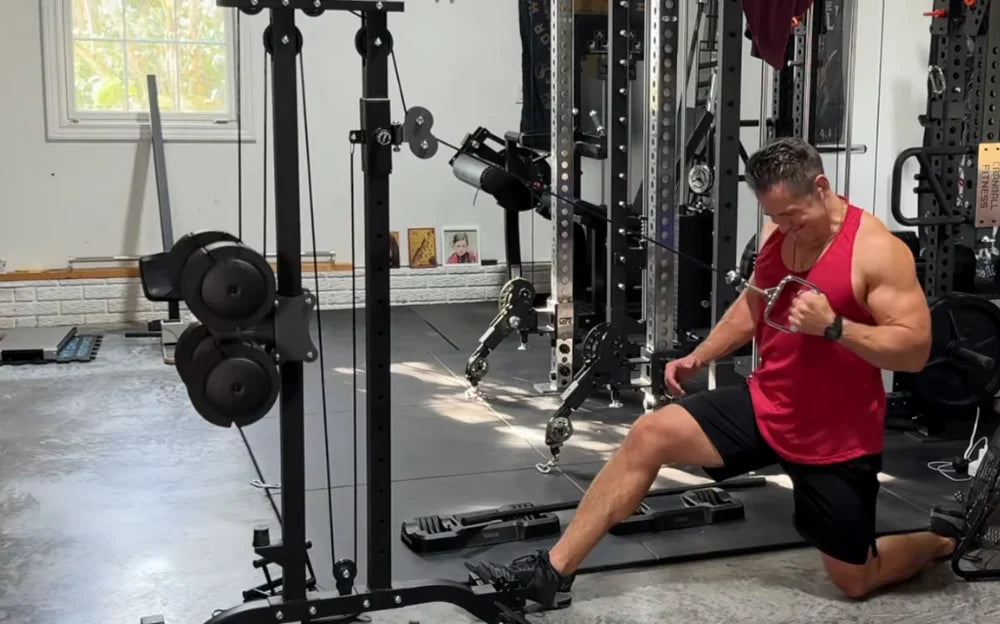
You want to build muscle, so you decide to incorporate weight training into your routine and buy a tub of protein powder. It makes sense: protein is essential for repairing and rebuilding muscle fibers that are broken down during exercise. But do you really need protein powder to build muscle? Let’s find out in this article.
How Do Muscles Grow?
Muscle growth (hypertrophy) doesn't actually happen while you are lifting weights; it happens while you are sleeping and recovering.
When you challenge your body with resistance training, you create microscopic tears in the muscle tissue. This sounds scary, but it’s exactly what we want. This damage triggers a biological repair process where your body fuses muscle fibers to form new muscle protein strands.
To do this, your body requires amino acids, the building blocks of protein. If the rate of muscle protein synthesis is higher than the rate of muscle protein breakdown, your muscles grow larger and stronger, according to the University of New Mexico.
How Much Protein Do You Really Need?
When it comes to building muscle, some of you might think the more, the better. However, according to the comprehensive review published in Nutrients by the Stuart Phillips Lab, your body has a very specific biological ceiling for how much protein it can actually use for muscle growth.
The 1.6g Rule for Optimal Gains
To optimize muscle hypertrophy, aim for about 1.6g of protein per kilogram of body mass per day, or approximately 0.7g per pound. Beyond the 1.6g mark (up to 2.2g/kg), the additional effects on muscle size are "greatly diminished." Instead of building more muscle, the “remaining amino acids are catabolized and serve as substrates for a range of metabolic processes”.
Example: If you weigh 170 lbs (77 kg), you should target about 123g of protein per day.
The Significance of Per-Meal Timing
The study highlights a phenomenon called the "Muscle-Full" effect. Your muscles can only process a certain amount of protein at once.
For most young adults, doses beyond 20g resulted in little stimulation of Muscle Protein Synthesis (MPS). Consuming 40g in one sitting only offers a marginal benefit (about 10–19% more) compared to 20g, and most of that extra protein is wasted.
So how should you plan your protein intake? The paper gives the solution: spread your intake into doses of 0.24~0.3g/kg every 3 to 5 hours.
Do You Need Protein Powder to Build Muscle?
If your breakfast already contains 25–30g of protein (e.g., a 3-egg omelet with Greek yogurt), adding a protein shake is essentially a waste because your body has already reached its synthesis peak for that window. Extra protein won’t build extra muscles.

However, if you only have time for a piece of toast or a small salad, you are well below the 0.24~0.3g/kg threshold needed for muscle growth. Protein powder will be an excellent tool to bridge the gap and ensure that the window of muscle building isn't lost.
Below are some of the foods that are high in protein:
- Egg: 6g (per large egg)
- Greek Yogurt: 10g (per 100g / plain, non-fat)
- Chicken Breast: 31g (per 100g, cooked)
- Lean Beef: 26g - 29g (per 100g, cooked)
- Lean Pork: 27g (per 100g, cooked)
- Almonds: 21g (per 100g / about 6g per handful)
So do you need protein powder to build muscle? No, protein powder is a supplement, not a requirement. If you can hit your targets with whole foods, save your money. If your lifestyle makes whole foods difficult, the powder is there to catch you.
Build Muscle at Home with Tousains
Regardless of how you get your amino acids, remember that protein is just the bricks, and you still need the builder—the right weight training machine. And this is where the Tousains home weight machine completes the equation.
From cable machine CR63, adjustable dumbbells MX55 to portable gym Hivegym, Tousains offers compact resistance training machines for you to get progressive overload at home and create these microscopic tears. Wondering how compact these machines can be? Visit Tousains website and discover its strength series.
FAQ:
Is 120 grams of protein enough to build muscle?
It depends on your weight. According to the 1.6g/kg rule, 120g of protein is the optimal daily amount for someone weighing approximately 75kg (165 lbs).
Will protein powder build muscle?
Not by itself. Protein powder is simply a convenient source of amino acids, and it only builds muscle when it helps you reach your daily protein goal in combination with consistent strength training.
How much protein does a woman need to build muscle?
It is based on body mass rather than gender. A woman should aim for the same scientific baseline: 1.6g of protein per kilogram of body weight (or ~0.7g per pound). For example, a 130lb (59kg) woman should target approximately 94g of protein per day.

